
Invisible no more - where capital meets community
How CLIX connects overlooked borrowers with community-backed capital, creating a fairer path to funding, trust and measurable local impact.
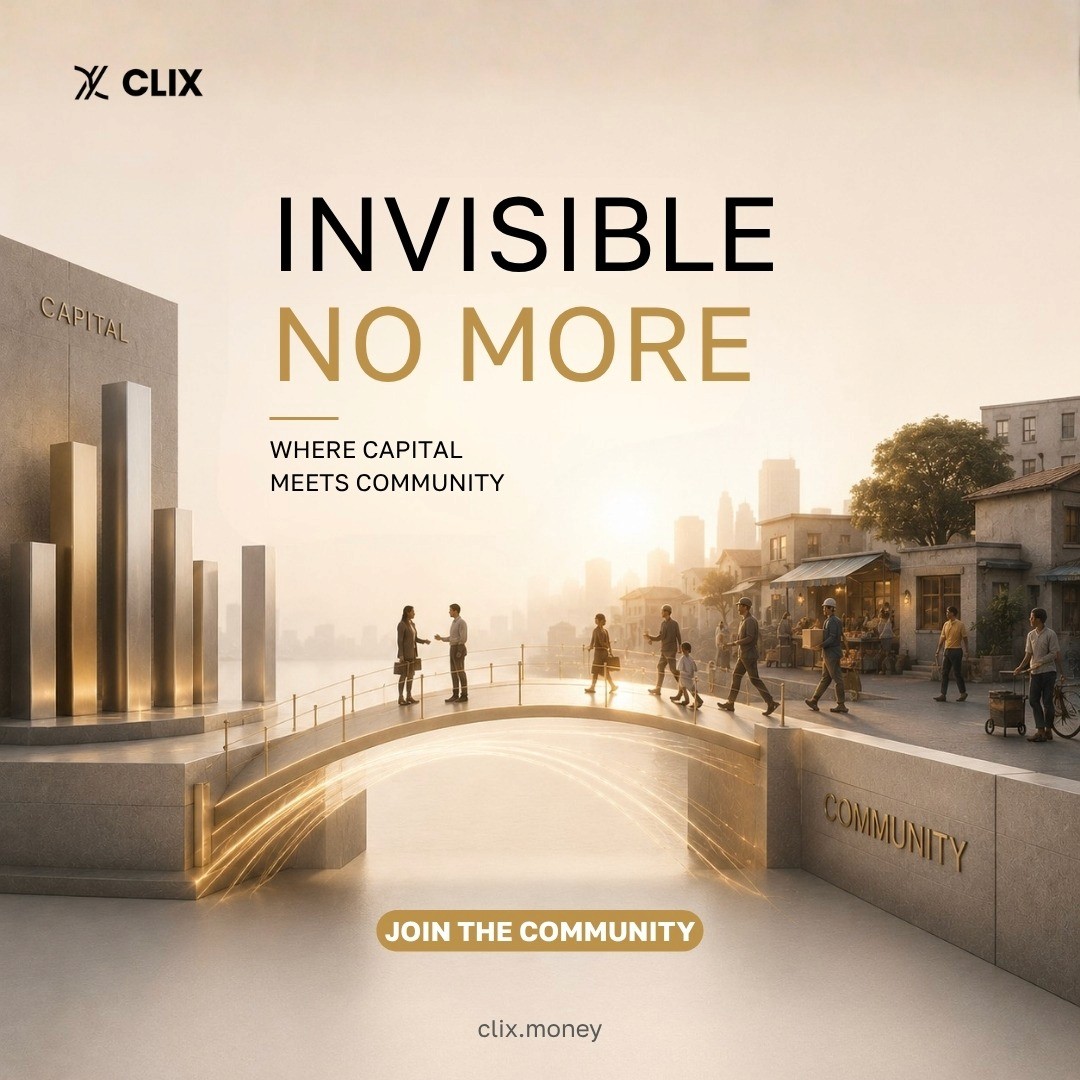
In the coastal city of Harbor Point, many families worked hard, paid their bills on time, and supported their communities, yet they remained invisible to the traditional financial system. They were teachers paid in cash, small business owners with irregular income, delivery drivers, tradespeople, and single parents who had never built conventional credit histories. Despite being responsible borrowers, they sat outside the gates of mainstream finance.
For years, charitable foundations and family offices in the city searched for a better way to create meaningful impact. Grants helped, but they often provided temporary relief rather than sustainable opportunity. Meanwhile, family offices wanted to put part of their capital to work in ways that generated both social impact and reasonable financial returns. The challenge was access: how could they identify trustworthy borrowers overlooked by traditional systems?
That changed when they discovered CLIX.
Through CLIX, foundations and family offices could deploy dedicated loan funding pools directly into underserved communities. Rather than relying solely on conventional credit bureau scores, the platform used alternative indicators and community-driven data to identify responsible individuals with strong repayment behaviors but “thin file” or credit invisible profiles.
Maria, a market stall owner, became one of the first borrowers. For years she had repaid informal loans from family and suppliers without missing a payment, but no bank would lend to her. Through CLIX, she received a modest loan to expand her business inventory. Across town, Hassan, a skilled electrician, secured funding to purchase equipment and take on larger projects.
As repayments flowed back through the platform, investors saw something unexpected: strong repayment performance and tangible community transformation. Businesses expanded, household incomes improved, and borrowers gradually built recognized financial histories. Communities once viewed as underserved became thriving ecosystems of opportunity.
The foundations realized they were no longer simply donating capital. Family offices discovered they were no longer choosing between purpose and returns. Through CLIX, capital and community had finally found a common language — creating a future where responsible borrowers were no longer invisible, and access to credit became a bridge rather than a barrier.