
The Credit Invisible
Millions of responsible people remain unseen by traditional credit systems. CLIX helps bring them into view through better data, trust and community-led finance.
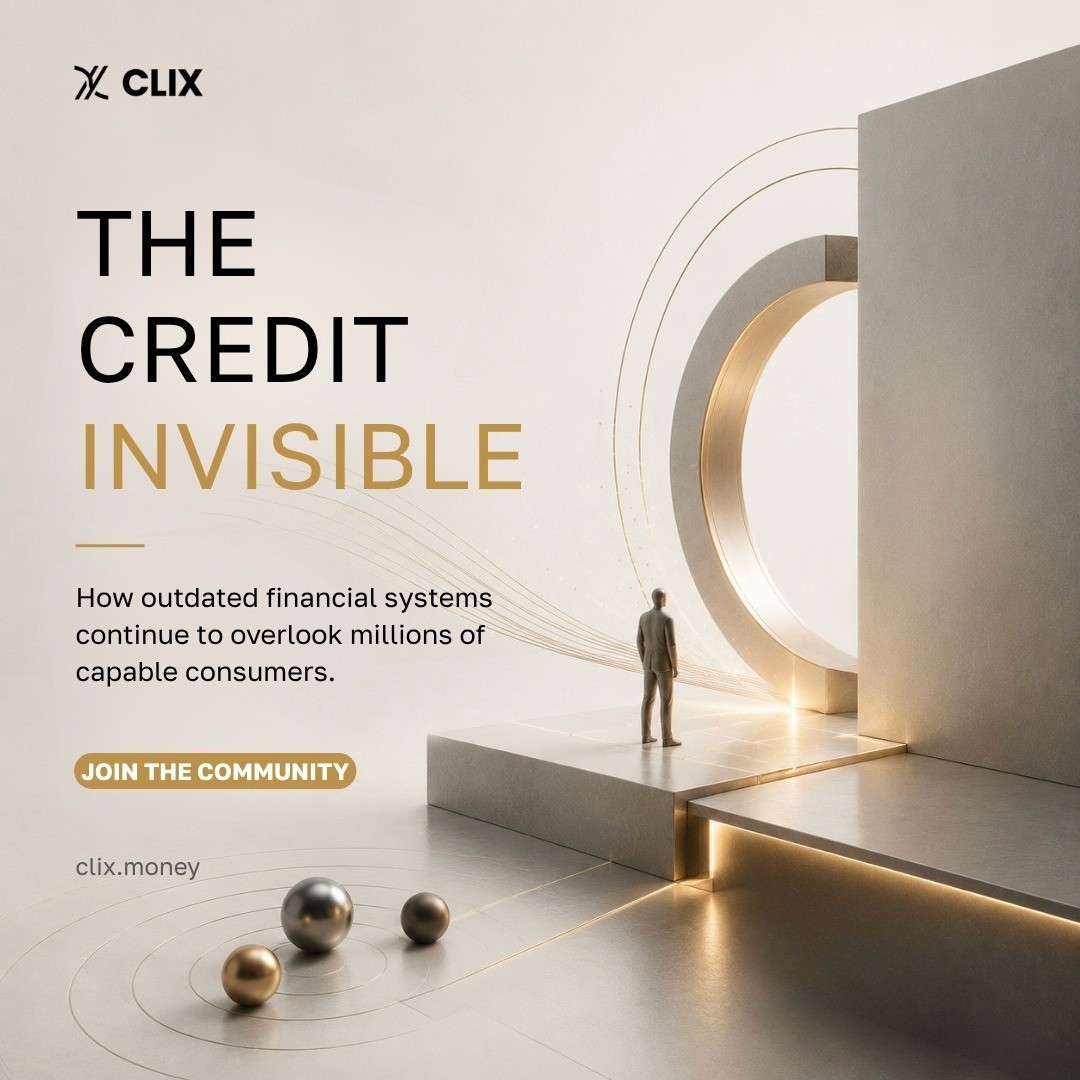
Millions of consumers sit outside the traditional consumer credit ecosystem, creating a significant challenge for financial inclusion. While mainstream lending relies heavily on banking history and established credit bureau records, many individuals do not fit neatly within these systems. As a result, access to fair and affordable credit often becomes difficult, despite many having stable incomes and the ability to repay.
The unbanked—those without access to basic banking services—face some of the greatest barriers. Without a checking account, debit card, or formal financial footprint, they often rely on cash transactions and alternative financial services. Similarly, the underbanked may have bank accounts but continue to depend on payday lenders, money transfer providers, or non-traditional financial products because mainstream institutions fail to meet their needs.
A growing concern is the rise of the de-banked population. These are individuals or businesses who have had accounts closed or denied access to banking services due to compliance concerns, risk policies, or changing institutional practices. Once excluded, re-entering the financial system can be extremely difficult, creating a cycle of financial isolation.
Many consumers also suffer from thin bureau credit files, meaning they have little or insufficient credit history recorded with credit agencies.
Young adults, immigrants, gig-economy workers, and people who simply avoid traditional borrowing often fall into this category. Conventional credit scoring models may interpret a lack of data as higher risk, even when no negative credit behavior exists.
The challenge for lenders is that traditional credit systems were designed around historical banking and borrowing behavior.
Consumers outside these frameworks can become "credit invisible", leaving responsible individuals underserved. Increasingly, innovative lenders are turning to alternative data sources—such as utility payments, rental histories, employment data, and digital financial behavior—to build a more complete picture of creditworthiness.
Expanding these approaches has the potential to improve financial inclusion and open access to credit for millions who have long been overlooked by the traditional system.
CLIX is dedicated to the development of its marketplace platform using AI driven reputation scoring, creating greater access to credit for all responsible Borrowers.